

The Science of Soot and Smoke: Why Professional Cleanup Matters
If you’re facing fire and smoke damage clean up in your home, here’s what you need to know right away:
- Safety First: Only enter after fire department clearance
- Quick Action Required: Acidic soot can permanently damage surfaces within hours
- Documentation: Take photos for insurance before cleaning anything
- Ventilation: Open windows but turn off HVAC systems
- Professional Assessment: Most homes need specialized equipment and techniques
Fire and smoke damage clean up requires immediate attention because smoke residue is acidic and can cause surfaces to corrode and stain permanently if left untreated. Unlike regular household dirt, soot particles are extremely fine and can penetrate deeply into porous materials, making DIY cleanup challenging and sometimes harmful.
In the aftermath of a fire, the impact of soot, smoke, and lingering odors can be overwhelming. Even a small kitchen fire can send smoke throughout your entire home, leaving invisible particles in areas far from the original fire. These particles don’t just cause unpleasant odors – they can damage electronics, corrode metal surfaces, and pose serious health risks.
“Fire damage is a very serious situation and should be addressed immediately,” notes industry experts. Within just a few minutes following a fire, plastics can be irreversibly damaged. In a few hours, furniture darkens, metals tarnish, and fiberglass yellows. After a few days, smoke damage to clothing, upholstery, and paint becomes permanent.
The emotional toll can be just as devastating as the physical damage. Many homeowners are shocked to find that the water used to extinguish the fire often causes additional damage that requires separate remediation steps.
If you’re in Temecula facing fire or smoke damage, contact the Renovation Pros team 24/7 for professional assessment and restoration. Our certified technicians understand both the visible and invisible aspects of fire damage.

Step-by-Step Fire and Smoke Damage Clean Up Roadmap
When disaster strikes your home, knowing exactly what to do next can feel overwhelming. That’s why we’ve created this clear roadmap for fire and smoke damage clean up based on our 30+ years helping Temecula families recover from fire disasters.
The restoration journey isn’t just about cleaning—it’s about safely bringing your home back to life through these critical steps:
- Emergency Response: Our 24/7 team arrives quickly to assess immediate dangers and begin mitigation. We understand that every minute counts when it comes to preventing further damage.
- Damage Assessment: We carefully document everything for your insurance company, taking detailed photos and creating a customized restoration plan that addresses your home’s specific needs.
- Board-Up and Tarping: Your home needs protection from the elements and unfortunately, sometimes from theft. We secure broken windows, damaged doors, and compromised roofs to prevent additional problems.
- Water Extraction: Many homeowners are surprised that water damage is often worse than the fire damage! We remove firefighting water quickly to prevent mold and structural weakening.
- Soot and Smoke Removal: Using specialized equipment, we clean affected surfaces with techniques specific to your type of fire damage.
- Deodorization: Smoke odors can hide in the strangest places. Our multi-layered approach eliminates odors, not just masks them.
- Cleaning and Sanitizing: We restore your salvageable belongings, from furniture to keepsakes, using specialized cleaning methods.
- Reconstruction: Finally, we rebuild damaged areas to bring your home back to its pre-fire condition.
“The biggest mistake homeowners make is underestimating how quickly smoke damage can become permanent,” explains our lead restoration specialist. “What looks like a simple cleanup job can actually require specialized techniques to prevent long-term damage.”
Immediate Do’s and Don’ts for Fire and Smoke Damage Clean Up
The first 24 hours after a fire are crucial. Here’s your emergency action plan to minimize damage while keeping your family safe:
DO:
Wait for the fire department’s official clearance before re-entering—your safety comes first. Once inside, shut off utilities if it’s safe to do so, especially if you suspect gas line or electrical system damage.
Open windows to increase ventilation (weather permitting) and place clean towels in high-traffic areas to prevent grinding soot deeper into carpets. Empty refrigerators and freezers if electricity is off, leaving doors propped open to prevent those awful odors.
Be sure to change HVAC filters daily during the first week—they’ll capture airborne soot particles. Don’t forget your houseplants! Gently wash both sides of leaves to remove damaging soot. And of course, contact your insurance company immediately to start the claims process.
DON’T:
Resist the urge to start scrubbing walls or ceilings—improper cleaning can set stains permanently. Keep all electrical appliances unplugged until professionally inspected, and never consume food or beverages that were exposed to the fire, smoke, or firefighting chemicals.
Avoid turning on ceiling fixtures if the ceiling is wet (water conducts electricity), and don’t send smoke-damaged clothing to regular dry cleaners—their cleaning processes can actually set smoke odors permanently into fabrics.
Perhaps most importantly, don’t touch soot-covered items with bare hands. The natural oils in your skin can embed soot into surfaces, making restoration much more difficult.
“After any fire, particularly an oil or grease-based fire, even a small one, there is almost always smoke damage to the walls and ceilings of the building,” notes fire restoration experts. This is why professional fire and smoke damage clean up is often necessary even for seemingly minor incidents.
Securing, Ventilating & Assessing the Site

The first 24-48 hours after a fire represent your critical window for preventing additional damage. Here’s how to properly secure and prepare your home for restoration:
Board-Up and Tarping
Those broken windows and damaged roof sections need immediate protection. Our emergency board-up services prevent weather damage, deter opportunistic theft, maintain structural integrity, and satisfy your insurance requirements.
“Even light rainfall can cause significant damage to exposed interiors after a fire,” warns our emergency response team. We’ve seen heartbreaking cases where a single rainstorm caused thousands in additional damage to properties that weren’t properly secured after a fire.
Documentation
Before the first cleaning cloth touches a surface, thorough documentation is essential. Take detailed photos and videos of all damage, create a comprehensive inventory of damaged items (with brand names and approximate values), record serial numbers of electronics and appliances, and save samples of damaged materials like carpet or drapery for insurance adjusters.
This documentation often makes the difference between a smooth insurance claim and a frustrating battle for proper compensation.
Ventilation Strategy
Proper ventilation helps remove smoke particles but must be done correctly. First, turn off your HVAC systems to prevent spreading soot throughout undamaged areas. Open windows and doors when possible, and use fans strategically to direct air outward, not inward. For serious smoke damage, professional air scrubbers with HEPA filtration may be necessary.
Insurance Contact
Call your insurance company immediately—don’t wait until morning. Document all conversations (who you spoke with, when, and what was discussed), request an adjuster visit as soon as possible, and ask about emergency funds for immediate expenses like temporary housing or clothing.
“The most important thing to remember is that entering a fire-damaged structure can be extremely dangerous,” cautions safety experts. The National Institute for Occupational Safety and Health (NIOSH) classifies fire-damaged properties as Immediately Dangerous to Life and Health (IDLH) environments, requiring proper protective equipment and training.
Removing Water, Soot & Odors: Tools, Techniques, and Timelines
Effective fire and smoke damage clean up requires specialized equipment and techniques that go far beyond standard household cleaning methods. Here’s what our professional restoration process typically involves:
Water Extraction and Drying (1-3 days)
We start with powerful industrial water extractors to remove standing water left from firefighting efforts. Then our high-capacity dehumidifiers and air movers work together to dry your home thoroughly. Throughout this process, we use professional-grade moisture meters to track progress and ensure we prevent mold growth in hidden areas.
Soot Removal (2-7 days)
Not all smoke damage is created equal. Different types of fires create different types of soot, each requiring specific cleaning approaches:
Dry Smoke from high-heat, fast-burning fires leaves a powdery residue that we address with HEPA vacuuming followed by specialized dry-cleaning sponges. Wet Smoke from smoldering, low-heat fires creates a sticky, smearing residue requiring chemical sponges and specialized cleaners. Protein Smoke from kitchen fires might be nearly invisible but carries strong odors—we use enzyme treatments and degreasing agents for these scenarios. Fuel Oil Soot requires solvent-based cleaners and multiple cleaning passes.
“Using the wrong cleaning method can actually drive soot deeper into materials,” explains our cleaning technician. “For example, using water-based cleaners on dry smoke can create a paste that permanently stains surfaces.”
Odor Elimination (3-7 days)
Smoke odor is notoriously persistent, which is why we employ a multi-layered approach:
Our air scrubbers remove airborne particles while ozone treatment neutralizes odor molecules chemically. For deeply penetrated odors, we use thermal fogging, which mimics how smoke traveled during the fire, sending deodorizing agents into the same tiny spaces. Hydroxyl generators safely break down odor compounds at the molecular level, and thorough HVAC cleaning prevents recontamination from your ventilation system.
Specialized Cleaning Solutions
Our restoration technicians are equipped with professional-grade solutions that outperform household cleaners:
Trisodium Phosphate (TSP) mixed with warm water (4-6 tablespoons per gallon) effectively cuts through soot on washable surfaces. Dry cleaning sponges made of vulcanized rubber lift soot without smearing. Enzyme treatments break down protein-based residues from kitchen fires, while our HEPA vacuums capture particles as small as 0.3 microns without releasing them back into the air.
According to restoration experts, “Products containing tri-sodium phosphate (TSP) can reduce odors in fabrics.” Some of our technicians even add a tablespoon of pure vanilla extract to laundry cycles to help neutralize smoke odors in clothing—a little restoration secret we’re happy to share!

Professional vs DIY Fire and Smoke Damage Clean Up
After a fire, it’s natural to want to start cleaning immediately—and to save money by doing it yourself. But fire and smoke damage clean up requires specialized knowledge and equipment that most homeowners simply don’t have access to. Here’s why professional restoration makes a crucial difference:
Safety Considerations
Fire damage creates hidden dangers. Our professional technicians come prepared with proper respiratory protection (N95 or better), chemical-resistant gloves, eye protection, and protective clothing. More importantly, they have training in how to steer hazardous environments safely.
“NIOSH classifies fire-boarded properties as IDLH (Immediately Dangerous to Life and Health),” note safety experts. Without proper protection, you risk exposure to carcinogens, respiratory irritants, and structural hazards that aren’t always visible to the untrained eye.
Equipment Differences
The gap between household cleaning tools and professional restoration equipment is substantial:
| Equipment | DIY Option | Professional Equipment | Result Difference |
|---|---|---|---|
| Vacuum | Household HEPA vacuum | Commercial-grade HEPA with specialized attachments | Professionals capture particles 5x smaller with no re-release |
| Cleaning Agents | TSP from hardware store | Industrial-grade cleaners specific to smoke type | Pro solutions neutralize rather than mask odors |
| Deodorization | Home air purifiers | Ozone generators, thermal foggers, hydroxyl generators | DIY can’t reach embedded odors in structure |
| Moisture Detection | Visual inspection | Thermal imaging and moisture meters | Pros find hidden water damage before mold develops |
| Air Filtration | Portable air purifier | Industrial air scrubbers with multi-stage filtration | Pro equipment processes 500-2000 CFM vs 100-200 CFM |
Expertise and Certification
At Renovation Pros, our IICRC-certified technicians bring specialized knowledge that makes all the difference. They understand the chemistry of different types of smoke damage, know which cleaning methods work for various materials, can assess structural integrity, identify hidden damage, and provide proper documentation for insurance claims.
“Even small fires warrant the immediate involvement of a restoration professional to prevent further damage,” advise industry experts. That seemingly simple cleanup job can quickly become complicated when dealing with the corrosive nature of soot and the penetrating properties of smoke.
Potential Risks of DIY Cleanup
We’ve seen the heartbreak that comes from well-intentioned DIY cleanup attempts gone wrong: permanent staining from improper cleaning techniques, soot embedded deeper into porous materials, overlooked water damage that leads to mold, smoke particles missed in HVAC systems, improper disposal of toxic materials, and inadequate documentation that leads to insurance claim denials.
One of our Temecula clients shared, “What looked like minor smoke damage in my kitchen turned out to affect the entire HVAC system. I wish I’d called professionals from the start.”
Whether you need help with water, fire, mold or any other restoration services, we are ready to answer the call. Contact Renovation Pros today for a professional assessment that will help protect your home and family.
Health, Insurance & Cost Questions Answered
When dealing with fire and smoke damage clean up, homeowners often have pressing questions about health risks, insurance coverage, and costs. Here are straightforward answers to the most common concerns:
Hidden Health Hazards: Soot, VOCs & Indoor Air Quality
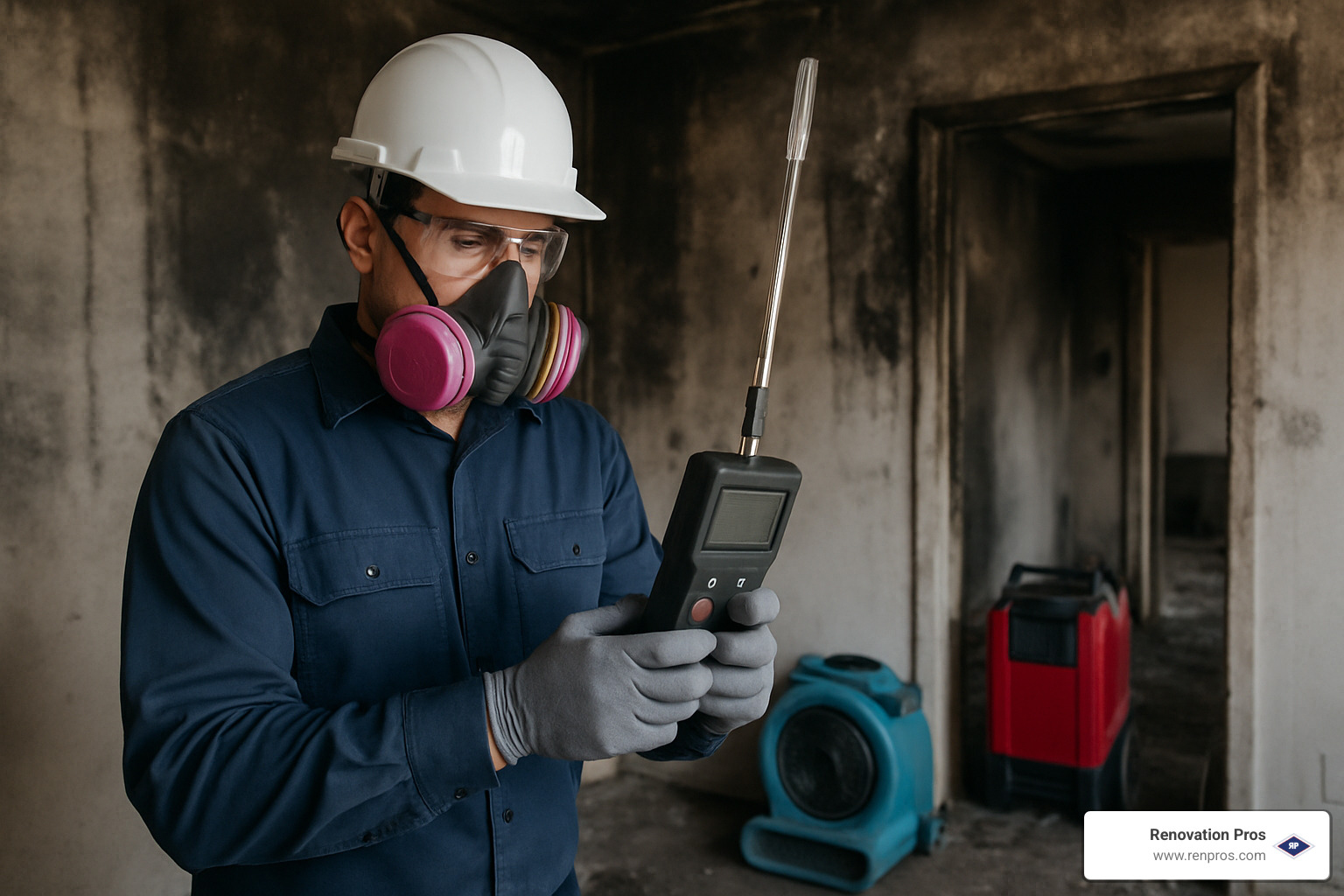
The aftermath of a fire leaves behind more than just visible damage – it creates an invisible health threat that many homeowners don’t fully understand.
Those tiny smoke particles from your house fire? They’re incredibly small – just 0.4 to 0.7 microns – small enough to bypass your body’s natural defenses and settle deep in your lungs. This isn’t just unpleasant; it can trigger serious respiratory problems like asthma attacks, bronchitis, persistent coughing, and difficulty breathing. Our most vulnerable family members – children, elderly relatives, and those with existing breathing conditions – face the greatest risk.
“What many homeowners don’t realize is that soot isn’t just dirty – it’s actually toxic,” explains our restoration team. “Those black particles contain chemicals that can irritate your skin, eyes, and respiratory system.”
Modern homes make this problem worse. When synthetic materials in your furniture, carpets, and building materials burn, they release a cocktail of harmful chemicals. These Volatile Organic Compounds (VOCs) include formaldehyde from pressed-wood products, hydrogen cyanide from burning fabrics, and acrolein from kitchen fires. Research published in the National Library of Medicine confirms that burning plastics produces hydrochloric acid that not only damages surfaces but poses serious health risks when inhaled.
The tricky part? Smoke doesn’t stay where the fire was. It’s sneaky – working its way into your HVAC system, wall cavities, and even closed closets. We’ve seen cases where electronics, books, and mattresses were damaged by smoke despite being rooms away from the actual fire.
“Smoke molecules are persistent,” notes our team at Renovation Pros. “They embed themselves in materials and continue releasing odors and toxins unless properly removed. This is why professional testing is so important – we can identify contamination that you can’t see but could still be making your family sick.”
Our specialized testing looks for particulate matter (especially dangerous PM2.5 particles), measures VOC levels, examines surface soot deposits, inspects HVAC systems, and provides clearance testing after remediation is complete. This comprehensive approach ensures no hidden health hazards remain in your home.
Navigating Insurance Claims and Documentation

Dealing with insurance after a fire can feel like learning a new language during an already stressful time. Let’s break down what you need to know to get the coverage you deserve.
Most homeowner’s policies cover the major fire-related expenses: structural damage, smoke and soot cleanup, water damage from firefighting efforts, content cleaning, and even additional living expenses while you’re displaced. According to the Insurance Information Institute, the average cost for a structure fire was $25,545 in 2019 – but your actual coverage depends on your specific policy limits and deductible.
Documentation is your best friend during this process. Think of it as building a case to show exactly what you’ve lost. Take plenty of photos and videos before touching anything. Create a detailed inventory of damaged items – include brand names, models, serial numbers, and approximate purchase dates. If you have original receipts, even better, but don’t worry if you don’t – most adjusters understand that receipts often perish in fires.
“The biggest mistake we see homeowners make is throwing away damaged items before the adjuster has a chance to see them,” says our claims specialist at Renovation Pros. “Even if something seems obviously destroyed, keep it until your adjuster has documented it.”
We’ve built strong relationships with insurance adjusters throughout Temecula and surrounding areas over our 30+ years in business. This allows us to help you steer common pitfalls in the claims process. We can prepare you for the adjuster’s inspection, explain technical aspects of smoke damage that might not be obvious, identify hidden damage that could be overlooked, and provide detailed scope-of-work documents that justify necessary restoration work.
Initial settlement offers might not account for hidden damage that becomes apparent later in the restoration process. Don’t forget to claim additional living expenses like hotel costs, restaurant meals, and laundry services while you’re displaced. And be especially careful with electronics and appliances – smoke damage can cause corrosion and failure months after the fire if not properly cleaned.
As one relieved client told us, “Having Renovation Pros handle the insurance paperwork made a world of difference. They knew exactly what documentation was needed and how to present it to my adjuster. I got a fair settlement without the stress of fighting for it myself.”
Budget & Timeline: What Determines Cleanup Costs and Duration?
When it comes to fire and smoke damage clean up, the two questions we hear most often are “how much will this cost?” and “how long will it take?” The honest answer is: it depends on several key factors.
The national average for fire damage repair is about $12,900, but that number can be misleading. We’ve handled jobs ranging from a few thousand dollars for minor smoke damage to over $50,000 for major structural repairs. What makes such a big difference?
Damage severity is the biggest factor. A small kitchen fire that was quickly extinguished might only need surface cleaning and deodorization (typically $2,000-$6,000). But if the fire spread to multiple rooms, compromised structural elements, or burned for an extended period, costs can quickly rise to $25,000 or more.
The size of your property matters too – larger homes simply require more labor, equipment, and cleaning solutions. But equally important are the types of materials affected. Porous surfaces like upholstery, carpets, and drywall absorb smoke odors deeply and are much harder to restore than hard surfaces like tile or metal.
“Not all soot is created equal,” explains our lead technician. “Dry soot from a fast-burning fire is relatively easy to clean. But wet, sticky soot from a smoldering fire? That’s much more labor-intensive and requires specialized cleaning agents. And protein residue from kitchen fires is nearly invisible but creates one of the most persistent odors you can imagine.”
Water damage from firefighting efforts often creates a second restoration challenge that requires its own remediation process, adding both time and expense to the project.
Time-wise, you’re looking at different phases: emergency services like board-up and water extraction typically take 1-2 days; soot and smoke removal requires 3-7 days depending on severity; cleaning and sanitizing can take 1-2 weeks; deodorization adds another 1-3 days; and repairs and reconstruction might range from a week to several months for major structural damage.
“Every fire is unique,” our project manager often reminds clients. “That’s why we provide such detailed assessments – we want you to have a clear picture of both the costs and timeline for your specific situation.”
Weather conditions, material availability, and permit requirements can all affect this timeline too. In Temecula, we’re fortunate not to deal with frozen pipes or winter delays, but summer heat can sometimes affect drying times and material curing.
At Renovation Pros, we pride ourselves on transparent, detailed estimates that break down exactly what you’re paying for – from emergency services to equipment costs to labor requirements. We want you to understand the value you’re receiving and have realistic expectations about the restoration journey ahead.
Whether you need help with water, fire, mold or any other restoration services, we are ready to answer the call. Contact Renovation Pros for a thorough assessment of your unique situation.
Conclusion
When it comes to fire and smoke damage clean up, there’s a world of difference between getting it right and living with lingering problems. The sneaky thing about soot is its acidic nature—it starts damaging your belongings from the moment it settles. Smoke has an uncanny ability to find its way into the smallest cracks and crevices, which is why professional help is so valuable.
Here at Renovation Pros, we’ve spent over 30 years helping families in Temecula and nearby communities recover from fire damage. Our team has seen how each fire situation tells its own story—some homes need minimal intervention while others require comprehensive restoration. That’s why our IICRC-certified technicians are always on call, day or night, ready to help homeowners throughout Temecula, Wildomar, and Canyon Lake when disaster strikes. And because dealing with insurance can feel like a second disaster, we handle those communications directly, lifting that burden from your shoulders.
If there’s one thing we’ve learned in our decades of service, it’s that time matters. Soot becomes more stubborn with each passing hour, making quick action essential. While waiting for our team to arrive, remember to protect yourself with appropriate gear, take plenty of photos for your insurance claim, and address any water damage immediately to keep mold at bay.
“Knowledgeable restoration specialists can make a massive difference in the aftermath of an emergency,” as industry experts note. At Renovation Pros, we’re not just restoring walls and furniture—we’re helping you reclaim your sense of security and comfort.
Want to protect your home from future fire damage? A few simple steps can make all the difference:
- Keep smoke alarms in working order on every level of your home
- Store fire extinguishers where you can easily reach them (and know how to use them!)
- Never walk away from a cooking stove—even for “just a minute”
- Schedule annual inspections for heating systems and chimneys
- Create a family escape plan and practice it regularly
If smoke and soot have invaded your home, don’t face it alone. Our family-owned business understands what you’re going through because we’ve helped hundreds of local families through similar situations. Visit our website to contact us and let’s start turning your smoke-damaged house back into the clean, fresh home you deserve.
Learn more about our Fire Damage Restoration services


