

When Your Water Heater Springs a Leak: Understanding the Emergency
If you’re facing a leaking water heater Temecula situation, here’s what you need to do immediately:
- Turn off power – Switch off electricity at the breaker box (electric heaters) or turn gas valve to OFF position (gas heaters)
- Shut off water supply – Turn the cold water inlet valve clockwise until tight
- Drain the tank – Connect a garden hose to the drain valve if needed to prevent further leaking
- Call professionals – Contact Renovation Pros for emergency service
A leaking water heater isn’t just an inconvenience—it’s a potential emergency that demands immediate attention. When hot water starts escaping from your unit, it can quickly damage floors, walls, and personal belongings, while creating perfect conditions for mold growth.
In Temecula, water heater leaks often go unnoticed until significant damage has occurred. This is because many units are tucked away in utility closets, garages, or basements where small leaks can develop gradually without detection.
“Hot water is a luxury that we often take for granted until we step into a freezing cold shower,” notes one local specialist. This sudden shock is often the first sign that something’s wrong with your water heater.
Water damage from a leaking unit can be especially problematic in Temecula homes, where the dry climate means materials dry quickly on the surface while moisture can remain trapped in walls and subfloors. This creates ideal conditions for mold growth, which can begin developing within just 48 hours.
The average lifespan of a water heater is approximately 10 years, but without proper maintenance, leaks can develop much sooner. Regular inspection and maintenance can help prevent these issues before they become emergencies. For more information on water heater lifespans and maintenance schedules, check out Energy.gov’s water heater guide.
Leaking Water Heater Temecula: Signs, Causes, and Immediate Steps
When you’re dealing with a leaking water heater Temecula situation, catching it early can save you thousands in repair costs and prevent serious water damage to your home. Knowing what to look for, understanding why leaks happen, and taking quick action are your best defenses against a minor issue becoming a major headache.
How to Identify a Leaking Water Heater in Temecula
Spotting a water heater leak early is crucial, especially here in Temecula where our unique climate can make water damage worse. Let me walk you through the warning signs that your water heater might be crying for help.
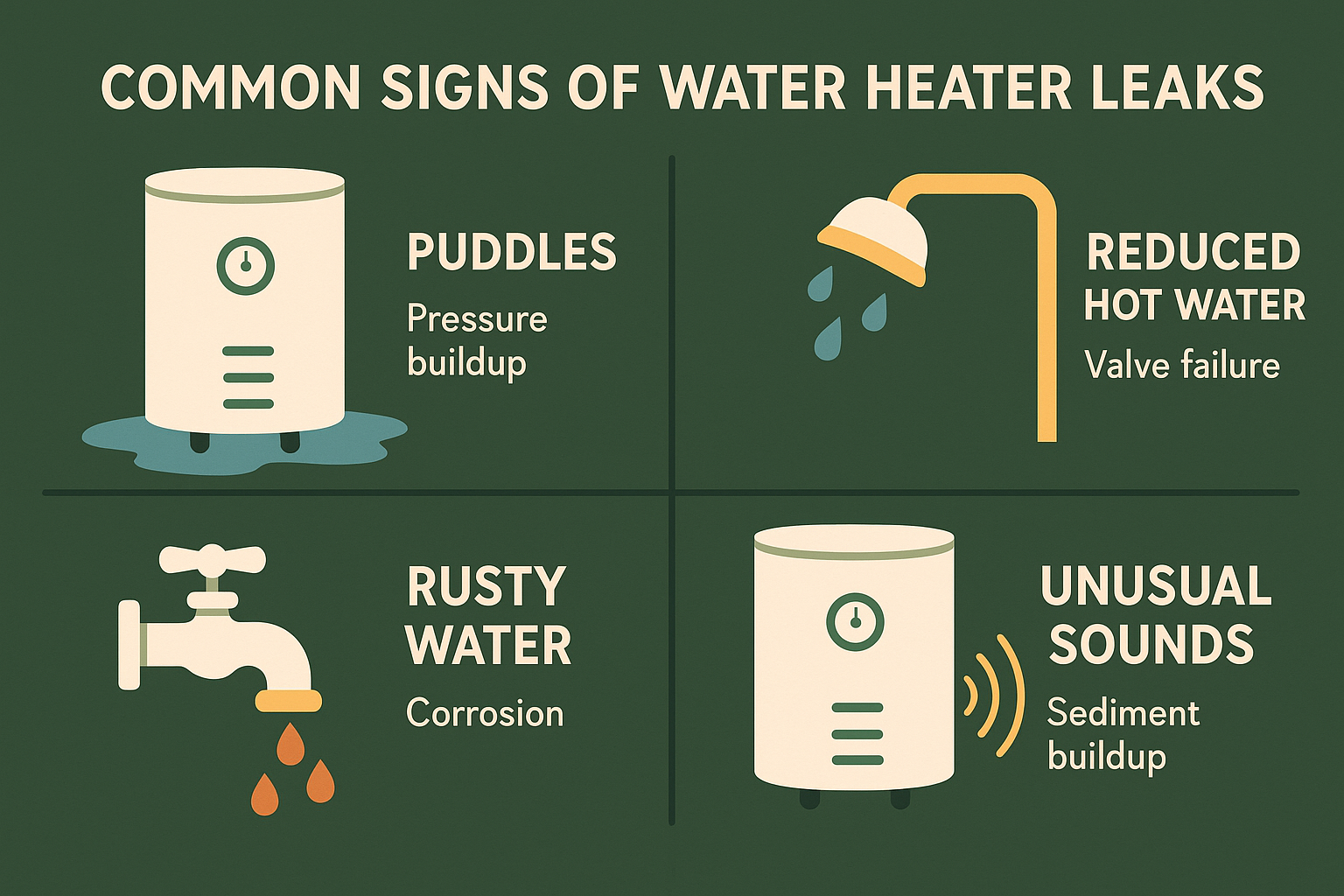
Water pooling around the base is the most obvious red flag. If you’re finding puddles forming near your water heater, something’s definitely wrong. One of our Temecula customers told us, “I found water pooling in my garage on a Friday night. By Saturday morning, it had spread to my living room. Thankfully, emergency services were able to respond quickly.”
Sudden lack of hot water might mean your morning shower turns unexpectedly cold. This often happens when your water heater is leaking and can’t maintain proper water levels or heating capacity.
Temperature that can’t make up its mind is another telltale sign. If your shower goes from comfortable to freezing and back again, your water heater might have internal issues that could lead to leaks.
Strange noises coming from your water heater aren’t just annoying—they’re warning signs. Those popping, rumbling, or banging sounds typically mean sediment has built up inside, which can cause overheating and eventually cracks in the tank.
Rusty or discolored water coming from your hot taps often means your tank is corroding from the inside out. This internal rust is usually the first stage before leaks appear.
Unexplained increases in your water bill might be the only clue you have if the leak is slow or hidden. If your usage hasn’t changed but your bill has climbed, your water heater could be the culprit.
Water stains or moisture on nearby walls or ceilings can appear if your water heater is located on an upper floor or in an attic space and has started leaking.
Here in Temecula, we face some unique challenges with our water heaters. Our hard water accelerates sediment buildup and corrosion inside tanks. Plus, our dry climate means small leaks might evaporate quickly on surfaces while causing hidden damage inside walls or under floors. That’s why regular inspections are even more important for Temecula homeowners.
As Debra Edwards, one of our Temecula customers, shared: “I am very happy with my service. The technician identified the issue before it caused serious damage to my home.”
Common Causes of Water Heater Leaks
Understanding why water heaters leak can help you prevent future problems. Here are the most common culprits we see in Temecula homes:
Sediment buildup is perhaps the most common issue in our area. Temecula’s water contains minerals that settle at the bottom of your tank over time. This sediment forces your water heater to work harder, creating hot spots that can eventually crack the tank and cause leaks.
Corrosion is the silent killer of water heaters. Over time, the protective anode rod in your tank wears down, allowing water to corrode the tank from the inside. Once this process begins, leaks become inevitable.
Faulty temperature and pressure relief valves are designed to release pressure when things get too hot. When these valves become defective or corroded, they can either leak themselves or fail to release pressure properly, potentially causing bigger problems.
Loose connections where water enters and exits your tank can develop small leaks as the metal expands and contracts with temperature changes. These connections often just need tightening, but if ignored, can lead to significant water damage.
Problematic drain valves at the bottom of your tank can develop leaks if damaged, not fully closed, or simply worn out from age and use.
Internal tank failure becomes more likely after years of heating and cooling cycles, especially if regular maintenance has been neglected. The tank itself can develop cracks or weak spots that eventually lead to leaks.
High water pressure in your home can place extra stress on your water heater system. Over time, this pressure can damage connections and even the tank itself.
Age is something none of us can escape—including water heaters. Most units last about 10 years, and beyond this point, the risk of leaks increases significantly regardless of how well you’ve maintained it.
Immediate Actions to Take When You Find a Leaking Water Heater in Temecula
When you find a leaking water heater Temecula situation, quick action can make all the difference. Here’s what you should do right away:

Safety first, always. If there’s standing water near electrical components, stay away from it. If you smell gas near a gas water heater, don’t try to fix anything—leave your home immediately and call your gas company from a safe distance.
Turn off the power to prevent further damage or safety hazards. For electric water heaters, find your home’s circuit breaker panel and switch off the breaker that powers your water heater. If you have a gas water heater, locate the on/off dial on the gas line near your unit and turn it to the “off” position.
Shut off the water supply by finding the cold water supply valve on the pipe leading into the top of your water heater. Turn it clockwise until it’s completely closed. If this valve is damaged or won’t budge, you might need to shut off your home’s main water supply instead.
Find the source of the leak if possible. Is it coming from a connection, a valve, or the tank itself? This will help you determine whether it’s a simple fix you might handle yourself or if you need professional help.
Drain the tank if necessary, especially if the leak is significant. You can attach a garden hose to the drain valve at the bottom of the tank and direct the water to a suitable drainage area or large buckets.
Clean up standing water quickly using towels, buckets, or a wet/dry vacuum. Fast action here can prevent water damage to your flooring, walls, and belongings.
Document everything by taking photos of the leak and any resulting water damage. These will be helpful if you need to file an insurance claim later.
Call Renovation Pros for emergency service. Our experienced technicians can quickly assess the situation and recommend the best solution for your specific problem.
John, a business owner here in Temecula, recently shared his experience with us: “Our water heater developed a leak sometime on a Friday. I found it Friday night, and we called right away. The technician came out that same night to help get the supply to the water heater turned off. The valve (which was just as old as the water heater) wouldn’t turn. So we had a night of roughing it. The workers showed up bright and early Saturday morning with a new water heater. Within two hours, we had a new water heater, a drip pan, and a functioning water supply again. They even took the old water heater for disposal.”
Water heater leaks don’t wait for convenient times, but with quick action and professional help, you can minimize the damage and get your hot water flowing again in no time.
Preventing Future Leaks and Considering Upgrades
After dealing with the immediate emergency of a leaking water heater Temecula situation, it’s time to think about preventing future headaches. Nobody wants to wake up to another puddle on the floor or cold shower surprise. With some regular care and smart decisions, you can avoid repeating this stressful experience.
Regular Maintenance to Prevent Leaks
Think of water heater maintenance like getting an oil change for your car—skip it at your peril. In Temecula, our mineral-rich water makes regular maintenance even more crucial.
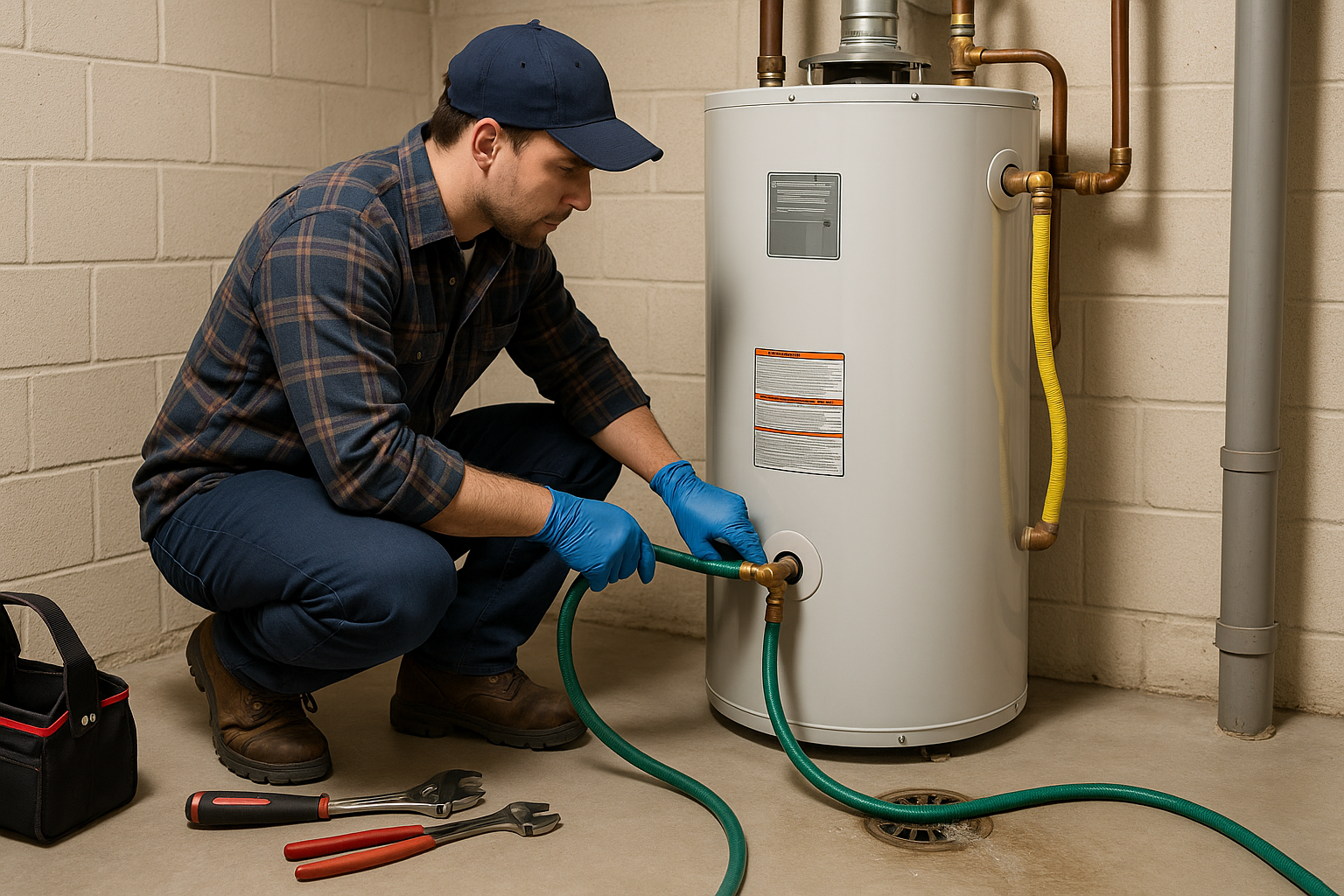
One of the most important maintenance tasks is flushing your tank annually. Those minerals in Temecula’s water love to settle at the bottom of your tank, forming a layer of sediment that forces your heater to work overtime. This not only drives up your energy bills but can create hot spots that crack your tank. The flushing process isn’t complicated—turn off power and water, connect a garden hose to the drain valve, and let water run until it’s clear.
Your water heater’s anode rod is its unsung hero. This sacrificial component attracts corrosive elements in the water, essentially taking the hit so your tank doesn’t have to. Check it every 3-5 years and replace it when more than 6 inches of the core wire is exposed or if it’s coated with calcium. Think of it as cheap insurance against a costly tank replacement.
“I tell my customers that skipping water heater maintenance is like never changing your car’s oil—eventually, something expensive is going to break,” says a veteran Temecula plumber. “Just 30 minutes of attention each year can add years to your heater’s life.”
The temperature and pressure relief valve needs annual testing too. This safety feature prevents dangerous pressure buildup that could turn your water heater into a rocket. Simply place a bucket under the discharge pipe, lift the valve’s lever halfway, and let it snap back. You should see a burst of water. No water? That valve needs replacement immediately.
Don’t forget to inspect all connections and valves for signs of corrosion or tiny leaks. These small issues can become big problems if ignored. While you’re at it, consider keeping your water heater set at 120°F—this prevents scalding, reduces energy costs, and decreases stress on your tank.
Many Temecula homeowners find that installing a water softener is a worthwhile investment. Our hard water is particularly tough on water heaters, and softening the water can significantly extend your heater’s lifespan by reducing mineral buildup.
Finally, having a professional inspection annually is money well spent. Trained eyes can spot potential issues before they become midnight emergencies.
For more comprehensive protection strategies beyond your water heater, check out our Tips for Preventing Water Damage.
Benefits of Upgrading to a Tankless Water Heater
If your current water heater has given you one too many headaches—or if it’s approaching retirement age—a tankless model might be worth considering. These modern marvels are becoming increasingly popular in Temecula homes, and for good reason.
| Feature | Traditional Tank Water Heater | Tankless Water Heater |
|---|---|---|
| Lifespan | 8-12 years | 15-20+ years |
| Energy Efficiency | Less efficient, heats water constantly | More efficient, heats water on demand |
| Space Requirements | Large, requires significant floor space | Compact, wall-mounted |
| Hot Water Supply | Limited to tank capacity | Unlimited continuous supply |
| Initial Cost | Lower upfront cost | Higher upfront cost |
| Long-term Cost | Higher operating costs, more frequent replacement | Lower operating costs, less frequent replacement |
| Maintenance | More frequent, more complex | Less frequent, simpler |
The energy efficiency of tankless models is impressive. Since they only heat water when you need it (rather than keeping 40+ gallons hot 24/7), you could save 24-34% on water heating costs. With Southern California’s energy prices, those savings add up quickly.
Perhaps the most loved feature is the endless hot water supply. “After switching to tankless, our family battles over bathroom time disappeared,” laughs Maria, a Temecula mom of three teenagers. “No more lukewarm showers for whoever goes last!” This continuous supply is possible because tankless heaters warm water instantly as it flows through the unit, rather than storing a limited amount.
If you’re tight on space, you’ll appreciate the compact design of tankless units. Wall-mounted and roughly the size of a small suitcase, they free up valuable floor space in utility closets or garages. This space-saving feature is particularly valuable in newer Temecula homes where every square foot counts.
The longer lifespan of tankless heaters—often 15-20 years compared to 8-12 for conventional models—means fewer replacements and less hassle over time. This durability, combined with reduced risk of catastrophic leaks (no standing water to escape), gives many homeowners valuable peace of mind.
Jackie from Temecula couldn’t be happier with her upgrade: “Excellent service. Highly recommended by the neighborhood website and did not disappoint. The staff came out on a Friday night for water heater repair and installed a tankless system the following day. Very nice employees and the endless hot water has been amazing for our family.”
While the initial investment is higher, potential tax credits and rebates for energy-efficient models can help offset the cost. Plus, many homeowners find the environmental benefits of reduced energy consumption personally satisfying.
Repairing vs. Replacing: Cost Considerations
When facing a leaking water heater Temecula situation, the repair-or-replace question looms large. This decision involves more than just comparing today’s repair quote to replacement costs.
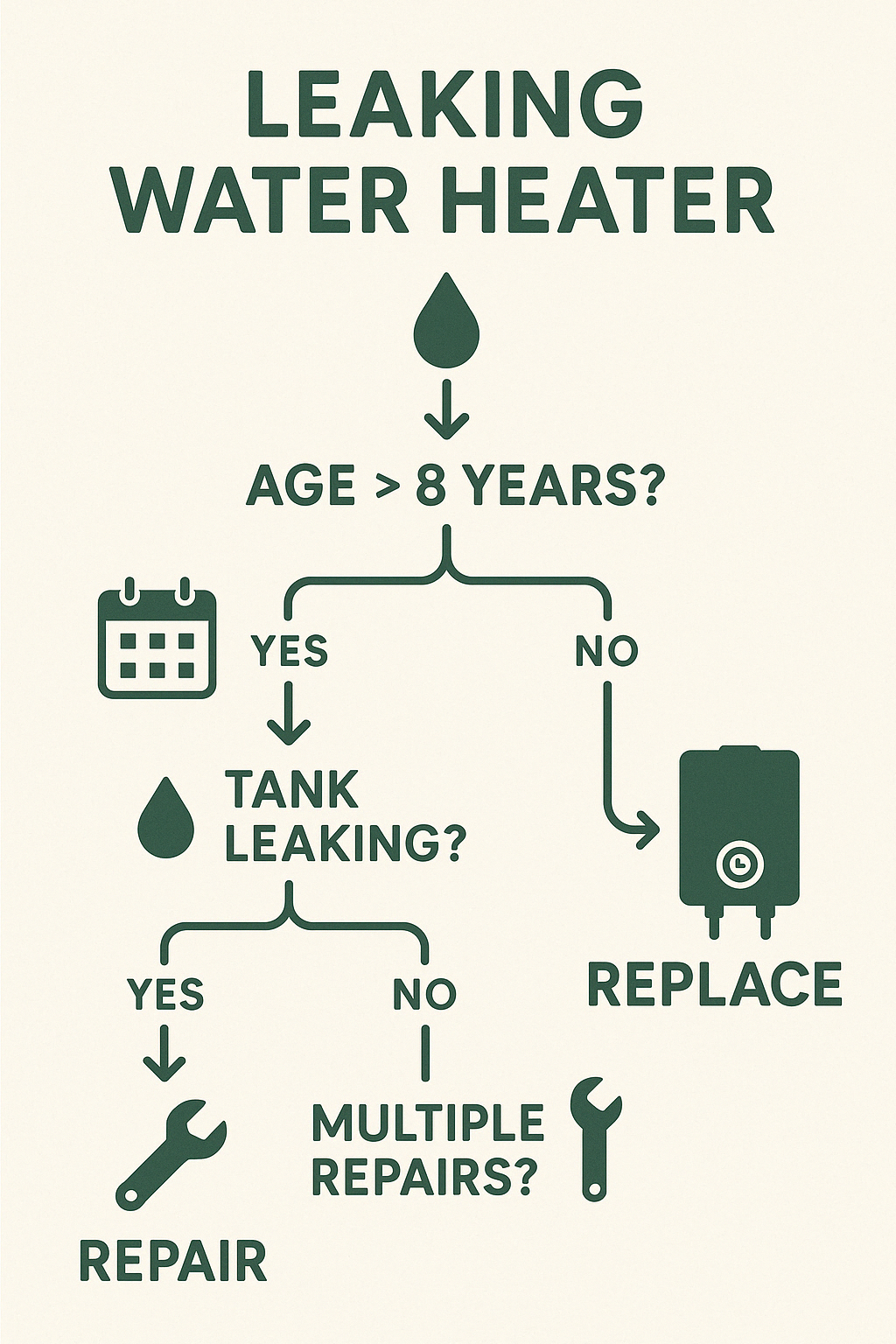
The age of your unit is perhaps the most telling factor. Water heaters, like cars, have a typical lifespan. Once your unit passes the 8-10 year mark, repairs become increasingly questionable investments. Think of it this way: would you put $500 into repairing a 12-year-old dishwasher? Probably not, and the same logic applies here.
The nature of the problem matters tremendously. Some issues, like a faulty pressure relief valve or loose connections, can be fixed relatively inexpensively ($150-$300). But if your tank itself is leaking due to corrosion or cracks, replacement is your only real option. As one technician puts it, “Once the tank starts leaking, it’s like trying to patch a paper boat—technically possible but not for long.”
Your repair history tells an important story too. If this is your water heater’s third repair in two years, it’s sending you a clear message about its future reliability. Frequent repairs often signal that other components are reaching the end of their useful life as well.
Efficiency improvements in newer models can make replacement more attractive. Today’s water heaters use significantly less energy than models from even ten years ago. These savings can help offset the replacement cost over time, especially in larger households where hot water usage is high.
When comparing costs, consider the full picture:
- Minor repairs (valve replacement, thermostat issues): $150-$300
- Major repairs (heating element, significant parts): $300-$600
- New tank water heater installation: $900-$1,500
- New tankless water heater installation: $2,000-$4,500
Your future plans should influence this decision too. If you’re planning to sell your home in the next year or two, a new water heater can be an attractive selling point. If you’re staying put, investing in quality makes even more sense.
Fran from Temecula shares a common emergency scenario: “My water heater broke on Friday night, just right before Memorial Holiday weekend. I knew it would be hard to get it replaced right away. Since I have three young kids and a wife with arthritis, I had to have it done. I called many companies and got the best quote. The technician reassured me that he would get me covered even if he had to squeeze me into the schedule. A few hours later, the technician showed up at my door. He installed the 75-gallon Bradford-White water heater and stayed to make sure everything was working.”
While repairs might seem less expensive today, they often lead to additional costs and inconvenience down the road. A new water heater offers reliability, improved efficiency, and protection against those middle-of-the-night emergencies that always seem to happen at the worst possible time.
Conclusion
Dealing with a leaking water heater in Temecula? It’s stressful, potentially damaging, and always seems to happen at the worst possible moment. But now that you understand the warning signs, common causes, and immediate steps to take, you’re better equipped to handle this emergency with confidence.
Quick action is your best friend when dealing with water heater leaks. Turn off the power first (safety always comes first!), shut off the water supply, and try to contain the water if possible. Then make that important call for professional help before the situation worsens.
Your water heater works tirelessly behind the scenes, providing hot showers and clean dishes day after day. Showing it some love through regular maintenance is the best way to prevent future headaches. A simple annual tank flush, checking those valves and connections, and replacing the anode rod when needed can add years to your water heater’s life and keep those unexpected leaks at bay.
“An ounce of prevention is worth a gallon of water damage cleanup,” as we like to say in the restoration business. This couldn’t be more true when it comes to water heaters in Temecula homes.
When your trusty water heater starts demanding frequent repairs or reaches its golden years (typically 8-10 years for traditional tanks), it might be time to consider an upgrade. Many of our Temecula customers have found that tankless water heaters provide an excellent return on investment through energy savings, endless hot water supply, and significantly reduced risk of catastrophic leaks.
At Renovation Pros, we’ve been helping Temecula families handle water emergencies for over three decades. As a family-owned restoration company, we understand that a leaking water heater Temecula emergency isn’t just about the physical damage—it’s about the disruption to your home life and the stress it causes your family.
That’s why our team is available 24/7 for emergency water damage restoration. We serve not only Temecula but surrounding communities including Wildomar, Canyon Lake, and Menifee with prompt, professional service when you need it most. We even work directly with insurance companies to make the process as smooth as possible during what’s already a stressful time.
Don’t wait until that small drip becomes a flood. Contact Renovation Pros today for expert assistance with all your water heater needs. For more information about our comprehensive approach to water damage restoration, visit our Water Damage Restoration page.
Temecula’s unique climate means that addressing water damage quickly is essential—moisture can hide in walls and floors, potentially leading to mold growth and structural issues if not properly addressed. Trust your local experts at Renovation Pros to protect your home and restore your peace of mind. After all, we’re not just service providers—we’re your neighbors.


